The 4Ds
Everyone's afraid AI will take their jobs… everyone except the political class. The 4Ds is the opposite bet: an AI-facilitated consensus process that lets a whole population decide for itself, faster, and strips away the only real advantage politicians have over the rest of us: speed.
by Asim Hussain · 16 June 2026
Everyone is worried AI is going to take their jobs.
Everyone except the political class. The same political class that’s happily letting it happen to the rest of us (and has convinced us that’s just life) while treating the idea of their jobs being automated as the collapse of democracy itself.
I believe the opposite. I want to live in a world where politicians are terrified of being replaced. Not by AI… by us. By people who’ve finally worked out how to come together, through AI, and decide things for themselves.
Because the only real advantage politicians have over the rest of us is speed. You can decide faster if you concentrate decisions in fewer hands. That’s the whole trick. Left versus right is largely an invention: a story sold to us so the political class can pretend they’re on our side. And the democracy we have today is nothing like the democracy of the past; the ancients would laugh at what we call it now. Strip the theatre away and what’s left is a machine for making decisions slowly, in private, by a few.
So the question that interests me is simple: can a whole population decide fast? Because if it can, it doesn’t need them.
At the Green Software Foundation we built a first attempt at an answer. We used AI to bring people together and facilitate genuine consensus, not to replace human decision-making, but to speed it up. We call it the 4Ds.
The problem it was built for
It came from a real bind: a consortium of seventy-plus member organisations trying to agree on standards, where a fork is failure and “three years to publish” means obsolete on arrival. Committees produce majority votes the minority never accepted; the thing quietly splits. Real consensus (where nobody walks away) is rare, slow, and usually rests on one very good human holding the room together.
The 4Ds runs over email (so no one’s locked out), asynchronously (so time zones stop mattering), and forward-only: once a section is settled, there’s no mechanism to reopen it. Four phases:
- 1
Design
Before anyone is asked anything, the facilitator and subject-matter leads build the assembly: the skeleton of what's being decided, section by section, each with a clear purpose, its limits, and what's out of scope.
- 2
Discover
Participants explore privately, one guided question at a time, finding the edges of their own thinking before they've seen anyone else's. The AI synthesises every answer into where you agree, where you don't, and the positions starting to emerge.
- 3
Deliberate
Now everyone sees everyone's positions for the first time, a public debate. People rate a handful of distinct candidate positions and argue them out. The signal that matters, and the one that's hard to fake: are minds actually changing?
- 4
Decide
One position goes to a vote on three words: Endorse (you back it), Consent (you won't block it), Object (and you must say what would need to change). Objections trigger an AI-drafted revision; then the section closes, for good.
That loop runs once per section of the document, and only forward, the AI facilitating every turn, the group settling one section before the focus drops to the next:
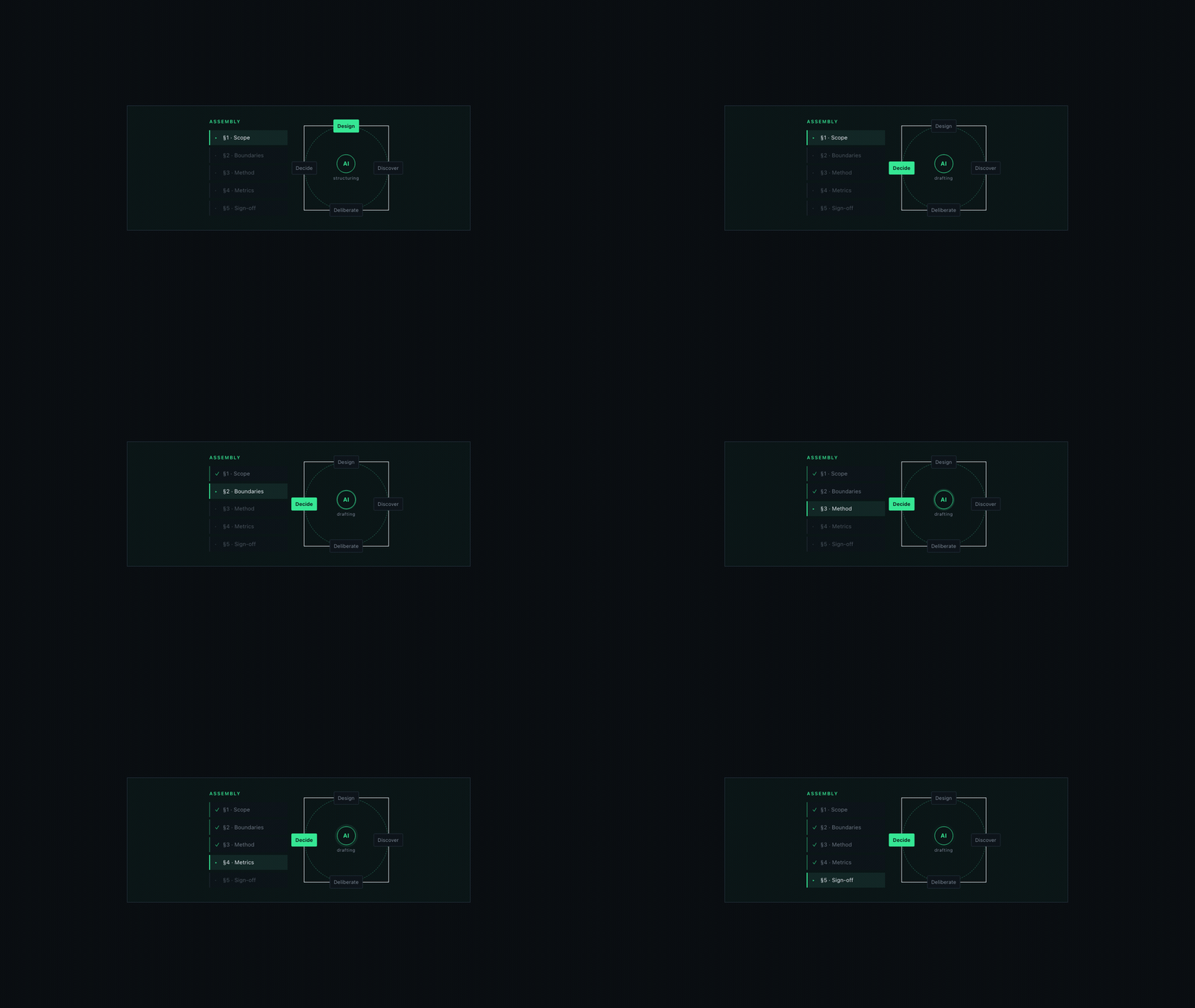
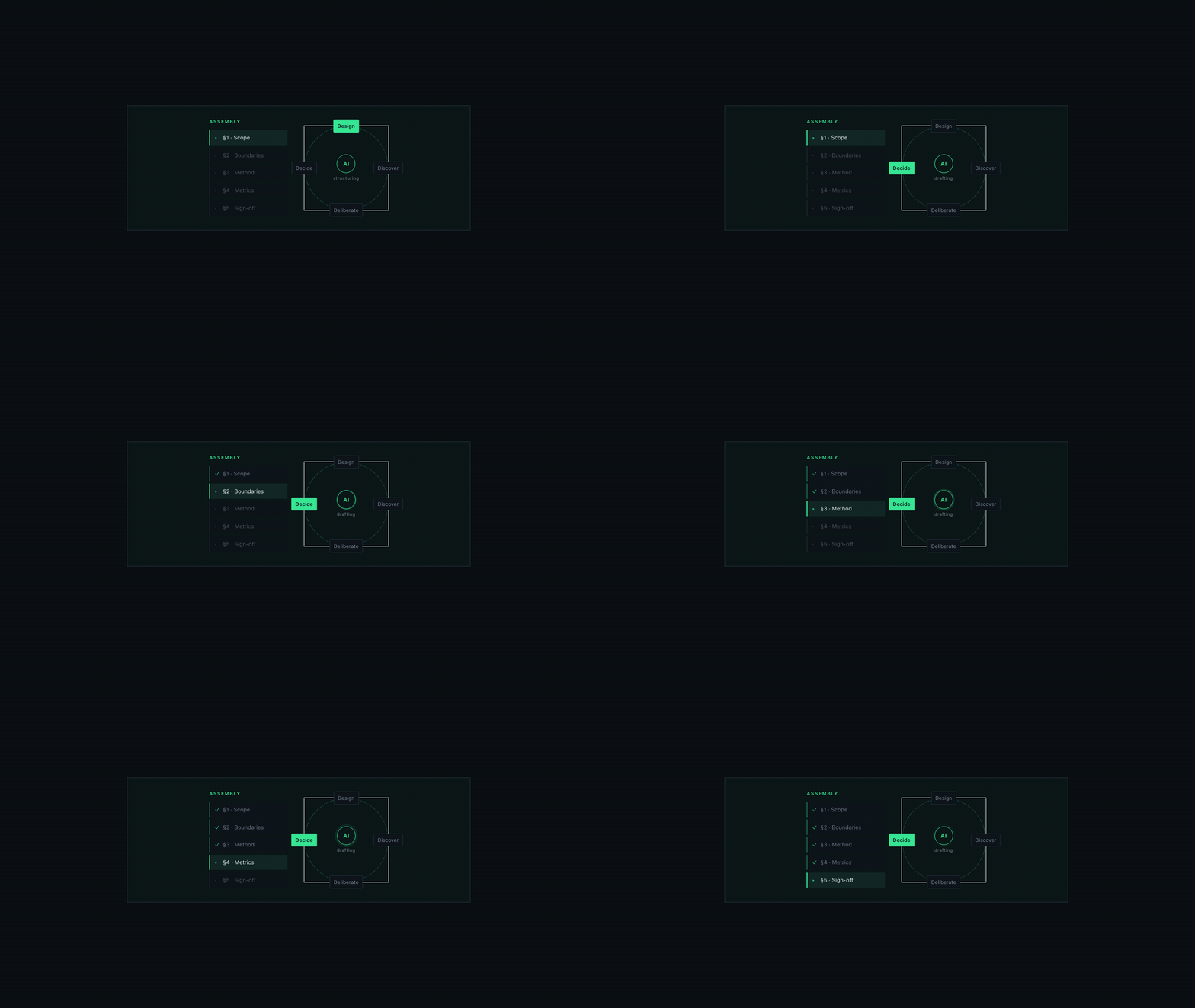
The philosophical core is consent over agreement: you don’t need everyone to love the answer, you need nobody willing to block it. That, plus forward-only, is what stops a process from running forever, and stops disengaged parties reopening a settled point at the last minute.
The catch
The honest weakness is the facilitator. Done well, the 4Ds leans heavily on an experienced human running it: designing the assembly, crafting the questions, judging when a phase is done, holding the integrity of the whole thing. That’s a lot of tacit skill. Codify more of those decisions and the process becomes trustworthy in more hands; leave them tacit and, the first time something goes wrong, people blame the process instead of how it was run, the same mistake people make when they blame AI for what is really a human not knowing how to use the tool.
That’s the work. The full method is in the GSF’s 4Ds repository, and putting it into more hands (without needing an expert at the controls) is what Isegoria is for.
If we can figure out how to decide faster as a population, we don’t need them. That’s the dream, anyway.
the edge weekly, from asim.dev
Building with AI, efficiently. My essays first, plus the week's links worth your time.
Double opt-in, one-click unsubscribe, your address goes nowhere else. Or grab the RSS feed